

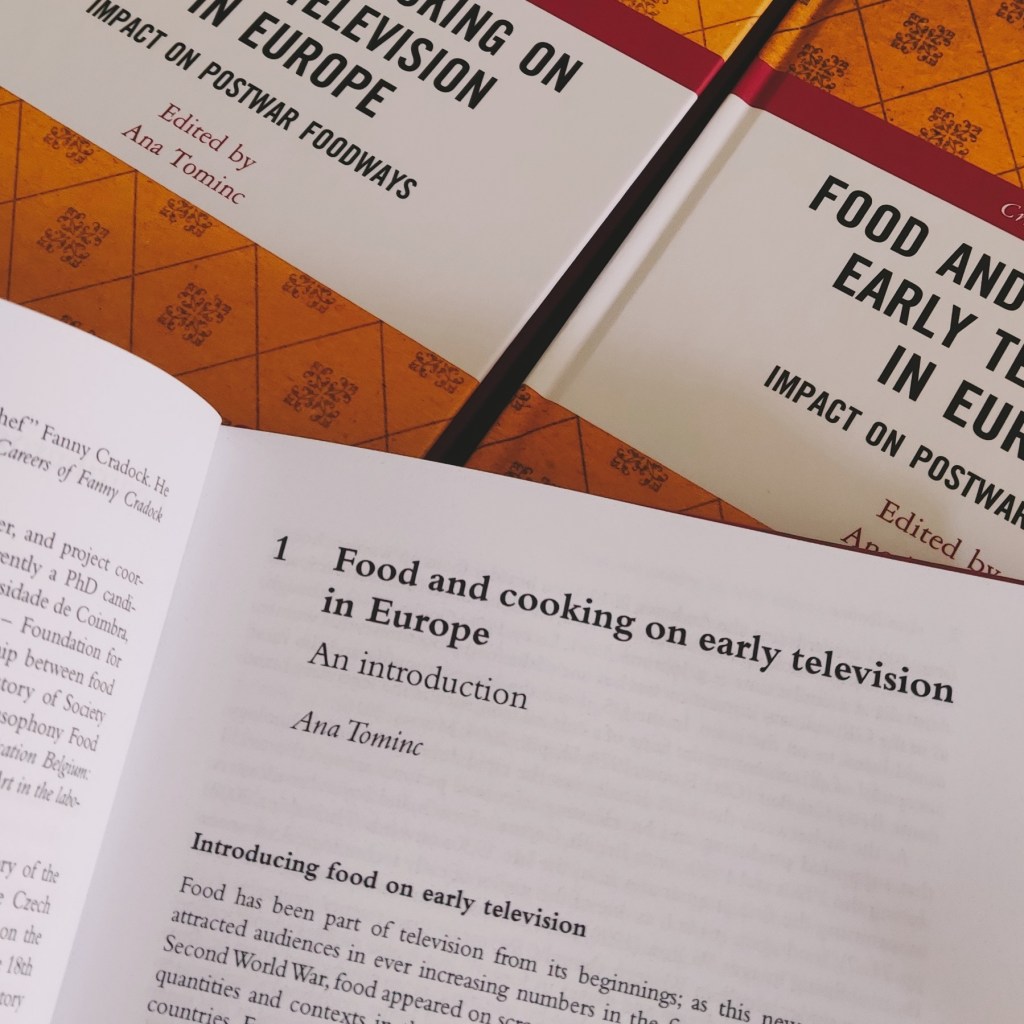
This collection critically examines the role of food programming on European early television and the impact this might have had on food habits and identities for the European audiences. It foregrounds various food programme genres, from travelog, cooking show and TV cooking competition, to more artistic forms. For the first time, it examines in one place eight European countries, from Portugal to Czechoslovakia and Britain to France and Yugoslavia, to explore ways in which television contributed to culinary change, demonstrating differences and similarities in which early food programme in Europe shaped and promoted progress, modernity, gender and national identities in both Eastern and Western Europe.
The book focuses on the difficult to access, early TV material revealing how the new medium of television treated food and cooking as both object of culinary instruction and as entertainment, engaging with ideas of nation, social class and modernization.
These studies examine the beginnings of the growing popularity and diversity of food programming across the media in Europe, demonstrating how many seminal issues of today’s digital food media were framed already in early TV programming. This allows for historical contextualization of food in relation to topics, such as TV advertising, nutrition, tradition and the nation, gender and cooking, and the role of celebrity in popularization of state-backed ideas around food. The collection transcends the easy cultural and political divisions between the East and West in Europe in the 1950 and 60, instead each study follows its own internal logic while the book’s Introduction and Conclusion draw useful parallels and differences between the cases. The individual studies collected in this book are placed against the background of the pioneering review of the existing literature on the topic, showcasing the diversity of programmes and genres on early food television in Europe. The volume, consequently, offers a powerful starting point for further research. Covering a real gap in TV history, the book is an excellent example of a coherent collaboration bringing forward work by established scholars and doctoral students alike from across Europe.
Listen to the podcast about this book:


 Ana Tominc