National Identity
- Ana Tominc, Ashli Stokes and Maryam Ishaq (forthcoming): Communicating Scotland through Food. From Devolution to Possible Futures. Peter Lang.
- Knight, Christine and Ana Tominc (2024): The travelogue cooking show in a sub-state nation: Representing Scotland in British food television. European Journal of Cultural Studies, Volume 27, Issue 5.
- Tominc, Ana (2023): Between the Balkans and Central Europe: Celebrity Chefs, National Culinary Identity and the post-Socialist Elite in Slovenia. Food and Foodways, 31(2), 67-89.
- Vezovnik, Andreja and Ana Tominc (2019): Potica, the leavened bread that reinvented Slovenia, in The Emergence of National Foods, edited by V. Congdon, A. Ichijo and R. Ranta. London: Bloomsbury.

Potica, the leavened bread that reinvented Slovenia
“During the early 2000s when Slovenia was about to join the EU, potica became an even more important signifier of ‘us,’ meaning ‘Slovene’ was no longer being opposed only to ‘Yugoslav’, but also to the EU from which ‘we’ now needed to differentiate ourselves from.” (p.44-45)
- Tominc, Ana (2014): Legitimising amateur celebrity chefs’ advice and the discursive transformation of the Slovene culinary national identity. European Journal of Cultural Studies, 17 (3), 316–337.
Populism
- Rankine, Amy, Ana Tominc and Mary Irwin (2023): One of the Boys: Beer and Populism in Contemporary British Politics. In The Geography of Beer: Policies, Perception, and Place. Edited by Mark Patterson and Nancy Pullen. Springer.
- Irwin, Mary and Ana Tominc (2023): How the Bendy Banana Became a Symbol of Anti-EU Sentiment: British Media, Political Mythology and Populism, in The Political Relevance of Food Media & Journalism: Beyond Reviews and Recipes (Routledge Research in Journalism Series), edited by L. Fakazis and E. Fürsich. London, New York: Routledge, 153-166.
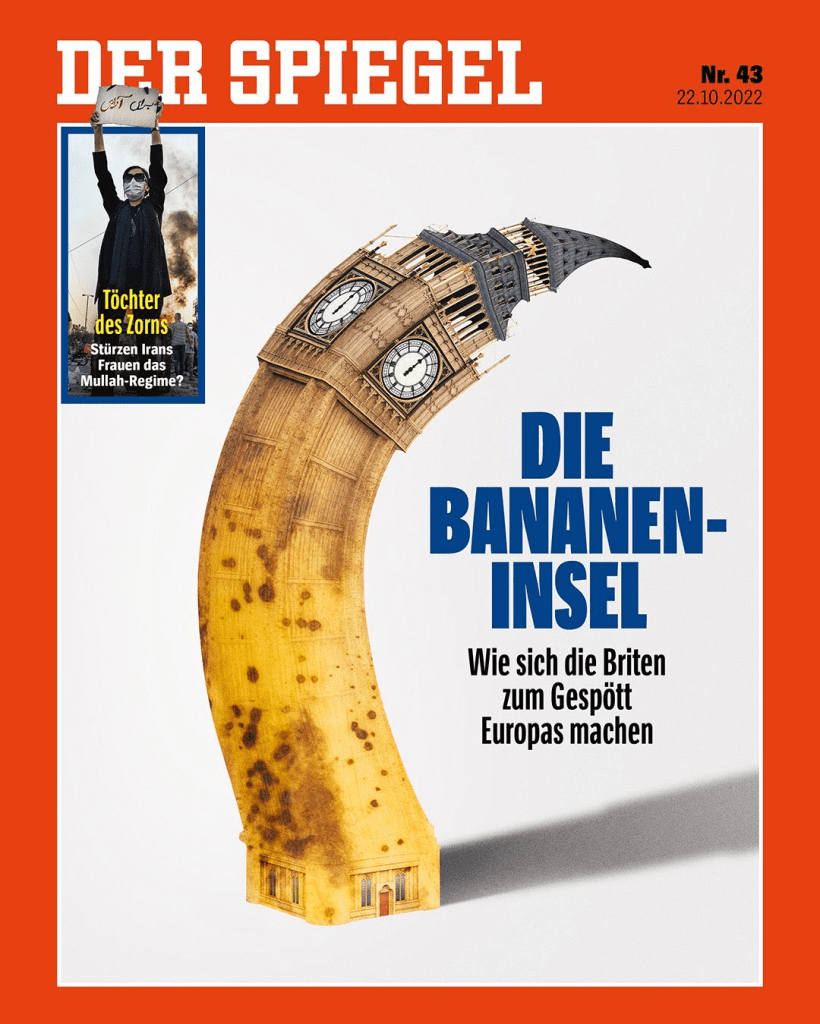
“In this article, we examine how
/…/ the banana – emerged and was then used as a totemic and highly suggestive symbol at the centre of political communication, gaining popularity in both political and popular discourse.”
Have a look at a video of one of our presentations ‘Regulation as Entertainment’ here.
 Ana Tominc